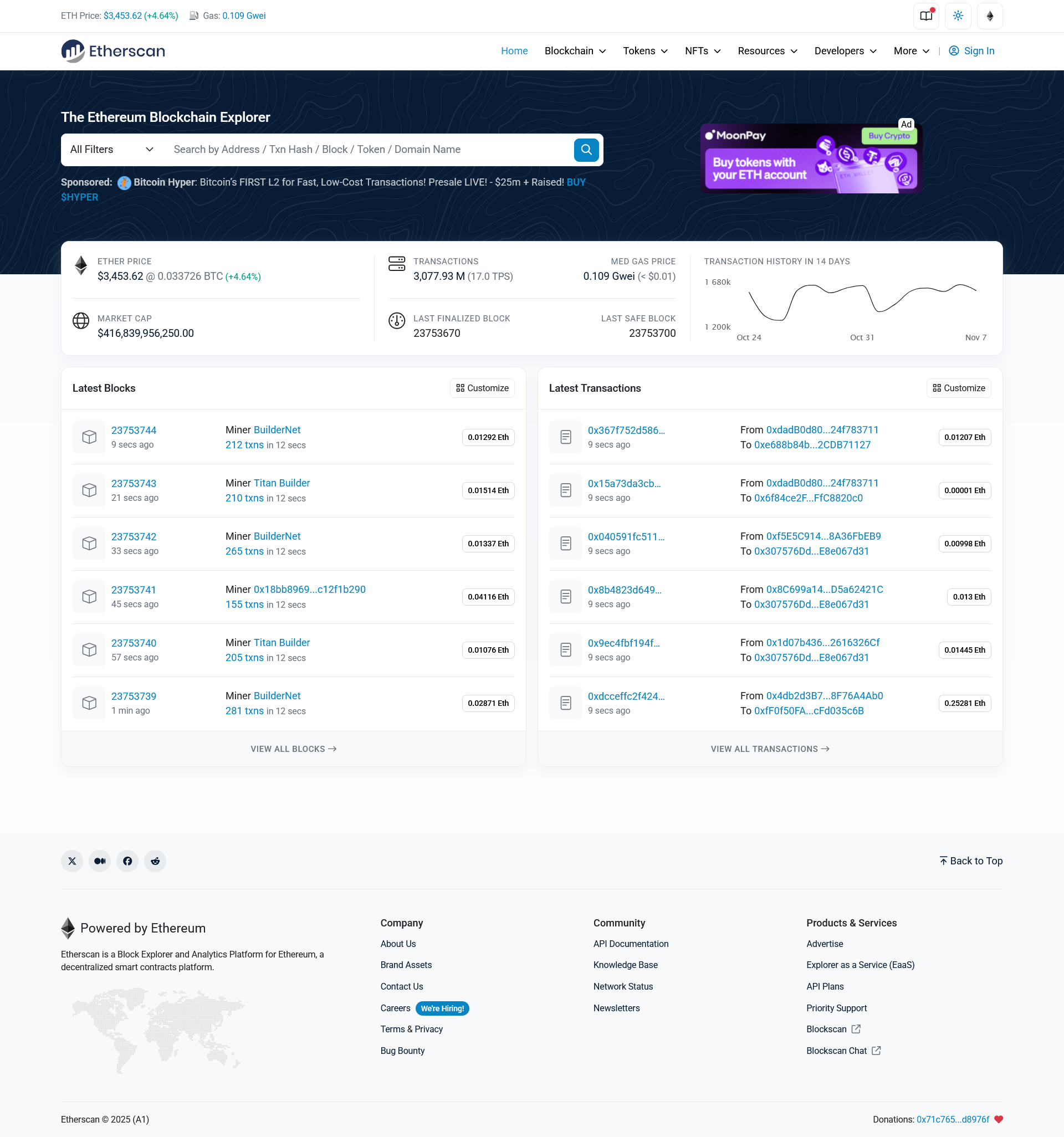
Etherscan: A Comprehensive Guide to the Ethereum Blockchain Explorer :
Etherscan is one of the most widely used blockchain explorers in the Ethereum ecosystem. It provides users with a transparent and user-friendly interface to explore, verify, and analyze activity on the Ethereum blockchain. From tracking transactions and wallet balances to inspecting smart contracts and NFTs, Etherscan plays a crucial role in making Ethereum’s decentralized network accessible to everyone.
What Is Etherscan ?
Etherscan is a blockchain explorer specifically designed for Ethereum. Launched in 2015, it allows users to search and view real-time and historical data recorded on the Ethereum blockchain. While Etherscan is not a wallet or an exchange, it acts as a powerful analytics and information tool that helps users independently verify blockchain data.
In simple terms, Etherscan is like a search engine for Ethereum.
Key Features of Etherscan ;
1. Transaction Tracking :-
Etherscan allows users to track Ethereum transactions using a transaction hash (TxHash). For each transaction, users can view:
. Sender and receiver addresses
. Transaction value
. Gas fee and gas price
. Block confirmation status
. Timestamp
This feature is essential for confirming whether a transaction was successful or pending.
2. Address and Wallet Analysis :-
By entering an Ethereum address, users can view:
. ETH balance
. Transaction history
. Token holdings (ERC-20, ERC-721, ERC-1155)
. DeFi and NFT interactions
This transparency helps users audit their own wallets or analyze on-chain activity.
3. Smart Contract Interaction :-
Etherscan enables users to:
. Read verified smart contract code
. Interact directly with deployed smart contracts
. Verify smart contract source code
This is particularly useful for developers and auditors who want to ensure contract authenticity and security.
4. Token and NFT Explorer :-
Etherscan supports a wide range of Ethereum-based assets, including:
. ERC-20 tokens (e.g., USDT, UNI)
. NFTs (ERC-721 and ERC-1155)
Users can explore token supply, holders, transfers, and contract details.
5. Gas Tracker ;
The gas tracker shows real-time gas prices, helping users decide the optimal fee to pay for faster or cheaper transactions. This is especially valuable during periods of network congestion.
Why Etherscan Is Important ;
Transparency and Trust.
Etherscan promotes trust by allowing anyone to independently verify transactions and smart contracts without relying on third parties.
Security Awareness
By inspecting contract code and transaction details, users can avoid scams, phishing attempts, and malicious contracts.
Developer and Research Tool ;
Developers rely on Etherscan for debugging, contract verification, and monitoring application activity. Researchers and analysts use it to study network trends and on-chain behavior.
Common Use Cases ;-
. Verifying whether a crypto transfer was successful
. Checking wallet balances and token holdings
. Auditing smart contracts before interacting with them
. Tracking NFT ownership and transfers
. Monitoring gas fees to reduce transaction costs
Limitations of Etherscan ;
Etherscan is extremely powerful, it does have some limitations:
. It does not reverse or modify transactions
. It does not store private keys or manage funds
. Understanding advanced data may require blockchain knowledge
Etherscan is an information tool, not a custodial service.
Conclusion ;
Etherscan is an essential component of the Ethereum ecosystem, providing transparency, accountability, and accessibility to blockchain data. Whether you are a beginner verifying a transaction or a developer auditing smart contracts, Etherscan empowers users to explore Ethereum with confidence. As blockchain adoption continues to grow, tools like Etherscan will remain fundamental to maintaining trust and decentralization in the crypto space.